
Be Quiet!

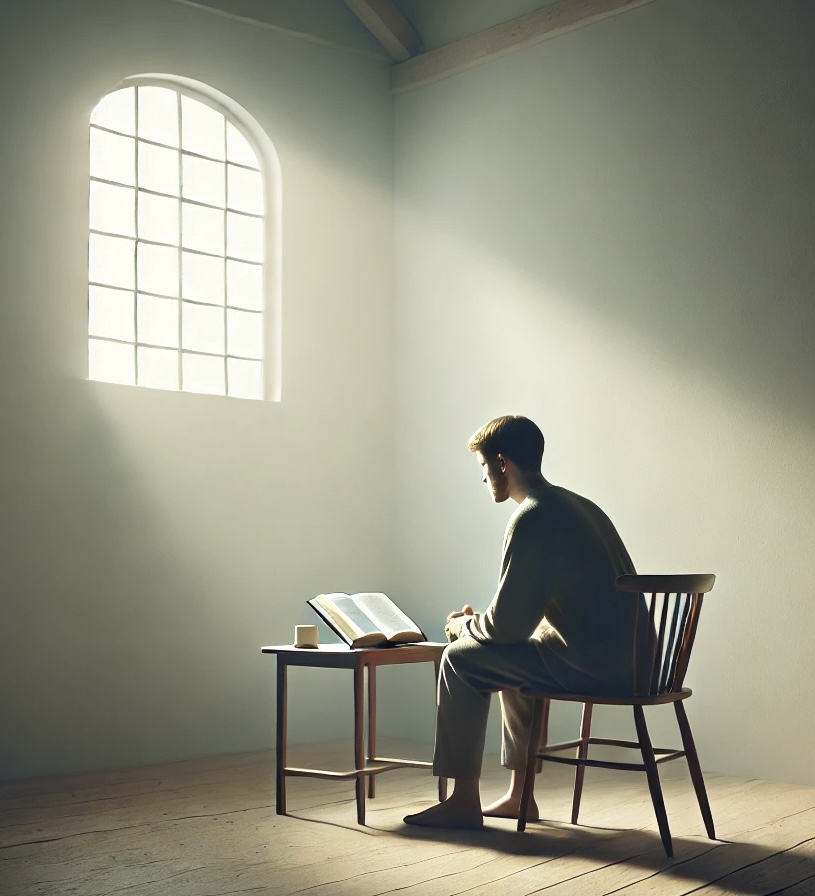
“All of humanity’s problems stem from man’s inability to sit quietly in a room alone.” this is one of my favorite quotes which. Blaise Pascal said centuries ago, and somehow, it feels even more true today. Think about it—how often do you reach for your phone the moment you’re bored? Why is it so uncomfortable to just sit still, alone with your thoughts? Pascal believed the answer wasn’t just about habit—it was about avoiding the truth.

He argued that when we sit quietly and step away from distractions, we’re forced to confront life’s deepest questions: What’s my purpose? Am I truly happy? Am I at peace with God? And let’s be honest—those questions can be intimidating. So instead, we distract ourselves. We dive into work, entertainment, and social media, anything to avoid the silence. But does it really work? Pascal didn’t think so, and the Bible agrees.

Paul says in Romans 1:18-20 that the truth about God is plain to us—His power and divine nature are clear in the world around us. But here’s the catch: people suppress that truth. Why? Because facing it means reckoning with who we are and how much we depend on God. That’s uncomfortable, so we run from it, filling our lives with noise and busyness instead.

Yet Scripture consistently shows that the solution isn’t more distractions; it’s stillness. In Psalm 46:10, God says, “Be still, and know that I am God.” Stillness allows us to see reality clearly—not just who God is, but who we are in relation to Him. And Jesus modeled this perfectly. Over and over in the Gospels, we see Him retreating to quiet places to pray, like in Matthew 14:23, where He went alone to a mountainside after a long day of ministry. If even Jesus needed time alone with the Father, how much more do we?

But solitude isn’t just about rest; it’s also transformative. In Lamentations 3:28-29, the writer encourages us to “sit alone in silence, for the Lord has laid it on him… there may yet be hope.” Sitting quietly forces us to face our pride, our sins, and our fears, but it also opens the door to humility, hope, and renewal.

Pascal’s insights also tie directly to Jesus’ teaching in Matthew 16:25: “Whoever wants to save their life will lose it, but whoever loses their life for me will find it.” Losing your life, in this sense, means letting go of the superficial self—the one that clings to comfort, distractions, and worldly success. When we lose that part of ourselves and embrace the truth, we find real life: peace with God and purpose in Him.

The problem is, distractions come with a cost. Pascal warned that diversions aren’t just innocent time-fillers—they’re a way to avoid dealing with life’s big questions. Jesus put it even more bluntly in John 3:19-20: “Light has come into the world, but people loved darkness instead of light… Everyone who does evil hates the light, and will not come into the light for fear that their deeds will be exposed.” It’s easier to stay busy than to let the truth expose what’s in our hearts. But the more we avoid it, the more restless and anxious we become.

So, what’s the way forward? How do we embrace the kind of solitude that Pascal and Scripture say is essential? Here are a few practical steps:
1. Start Small. Spend just 5-10 minutes a day sitting quietly. Use that time to pray or reflect on verses like Psalm 62:1: “Truly my soul finds rest in God; my salvation comes from him.”
2. Turn Off the Noise. Create boundaries with your phone and social media. Try sitting alone without reaching for a screen or filling the space with background noise.
3. Ask the Hard Questions. In your quiet moments, be honest with yourself: What truths am I avoiding? What distractions are keeping me from God?
4. Follow Jesus’ Example. Make time regularly to step away from the chaos of life. Jesus often retreated to solitary places to connect with God—and in those moments, He found strength and clarity.

Pascal’s challenge is simple but profound: Can we sit quietly, alone, and face the truth? Scripture assures us that when we do, we don’t face it alone. God meets us there, in the stillness, offering the peace and purpose we so desperately seek.

So, take a moment. Turn off the noise. Sit in the quiet. It may feel uncomfortable at first, but in losing the distractions, you’ll gain something far greater: the presence of God and the life He created you to live.
You Only Need One Thing

Imagine walking into a bustling home filled with the clatter of dishes and the hum of activity. In the kitchen, a woman rushes about, flushed and flustered, trying to keep up with the demands of hosting. But across the room, her sister sits motionless, absorbed, her eyes fixed on their guest. She isn’t helping in the kitchen, cleaning, or preparing. She’s simply sitting—still, attentive, and focused.

This is the scene in Luke 10, when Jesus visits the home of Martha and Mary. Martha’s frustration boils over, and she pleads with Jesus to make Mary help. But His reply is unexpected:“Martha, Martha, thou art careful and troubled about many things: But one thing is needful: and Mary hath chosen that good part, which shall not be taken away from her.”(Luke 10:41–42).

One thing. In a world drowning in demands, distractions, and endless duties, Jesus cuts through the noise and declares there is only one thing we truly need. And Mary found it—not in activity, but in sitting at the feet of Jesus and listening to His Word.

This story isn’t just a quaint moment in the Gospels. It’s a profound lesson for every believer today. The “one thing” Jesus spoke of is the meditation on and devotion to God’s Word—the only thing that truly sustains us.

The Word as Our Spiritual Food

Jesus’ words to Martha are not a dismissal of work or service. Rather, they are a call to prioritize what matters most. The Bible consistently teaches that God’s Word is essential to our lives. Jesus makes this clear in Matthew 4:4:“Man shall not live by bread alone, but by every word that proceedeth out of the mouth of God.”Just as food nourishes our bodies, the Word nourishes our spirits.

But think about it—what happens when you go without eating? Your stomach growls, your energy fades, and eventually, your body begins to shut down. The same is true spiritually. When we neglect the Word of God, we grow weak. Our faith falters, our joy diminishes, and our ability to resist temptation crumbles. Without the Word, we are spiritually starved.

Mary understood this in a way Martha didn’t. Martha was feeding her guests, but Mary was being fed by Jesus’ words. She realized that spiritual food takes precedence over even the most pressing of tasks.

God’s Word is Alive and Transforming

Here’s the thing: the Word of God is not just a collection of ancient texts or moral teachings. It is alive. Hebrews 4:12 declares: “For the word of God is alive, and powerful, and sharper than any twoedged sword.”When we meditate on Scripture, we aren’t simply reading words on a page. We are engaging with the living, breathing truth of God. His Word cuts through confusion, convicts us of sin, and brings clarity to life’s complexities.

Proverbs 4:22 describes the transformative power of God’s words:“For they are life unto those that find them, and health to all their flesh.”The Bible isn’t just informational—it’s transformational. It brings life to our spirits, healing to our bodies, and guidance for our minds.

When we sit with God’s Word—whether reading it, hearing it, or reflecting on it—we open ourselves to His transformative power. It renews our minds, strengthens our hearts, and equips us to face life’s challenges.

The Danger of Neglecting the Word

But as alive as God’s Word is, it won’t transform us if we fail to engage with it. Skipping time in God’s Word is like trying to run a marathon on an empty stomach—you might start strong, but eventually, you’ll collapse. Without the Word, our spiritual strength fades, our faith becomes brittle, and we are left vulnerable to the storms of life.

Neglecting the Word leaves us directionless. It’s no wonder Psalm 1 compares the person who meditates on God’s Word to a tree planted by streams of water—stable, fruitful, and unshakable. The person who ignores it? They are like chaff, blown away by the wind.

Spiritual starvation is subtle at first. You skip a day in the Word, then another. Soon, you find yourself running on empty, your faith dry and brittle. But the good news is this: God’s Word is always ready to restore us. One verse, one moment of meditation, can reignite a fire in your soul.

The One Thing Needed

So, what about us? Are we like Martha, “careful and troubled about many things,” or like Mary, sitting at the feet of Jesus? The truth is, we all live in Martha’s world—a world of deadlines, distractions, and constant demands. But Jesus reminds us that onlyone thingis needful. When we meditate on the Word, everything else falls into its proper place. Our priorities shift, our burdens lighten, and our hearts find rest.

But let’s be honest—if we refuse to do thisone thing,we are, in essence, saying we don’t believe Jesus. We’re declaring that we know better than the One who is the Way, the Truth, and the Life. How can we truly call ourselves believers if we don’t actually do what He has told us is most important?

James 1:22 challenges us with this truth:“But be ye doers of the word, and not hearers only, deceiving your own selves.”If we claim to believe in Jesus, our faith must lead to obedience. To ignore His instruction to prioritize His Word is to live in self-deception, claiming allegiance to Christ while disregarding His authority.

Jesus has made it clear:“One thing is needful.”To reject this is to reject not only His guidance but His lordship over our lives. But to embrace it—to choose the “good part,” as Mary did—is to live in alignment with His will, nourished by the very words of life.

Engage with the Word in Any Form

The question isn’t just whether we’ll read our Bibles, spend time in prayer, or engage with God’s Word in other ways. Whether it’s listening to Scripture, soaking in inspired messages, or reflecting on a powerful sermon, the heart of the matter is this: will we truly believe Jesus enough to do what He says we need to do? If we refuse to prioritize His Word in any form—reading, hearing, or meditating on it—can we really call ourselves His followers? Faith is not merely what we profess but what we practice, and engaging with God’s Word is the practice Jesus has made non-negotiable for all who claim to follow Him.

Let us, like Mary, choose the “good part.” Whether by reading it, hearing it, or meditating on it, let God’s Word become the priority of our lives. It will never be taken from us, and it is the only thing we truly need.

For more resources to help you meditate on God’s Word, visit these websites:

www.JosephPrince.com

www.awmi.net/video/tv-archives