
Seven Benefits of Jesus’ Blood

It’s honestly amazing when you stop and think about it — the blood of Jesus doesn’t just do one thing. It’s not just forgiveness or redemption; it’s seven powerful, life-changing gifts poured into your life through one act of love. The Bible describes the blood of Christ like a divine key that has unlocked every door between you and God. It didn’t just wipe away your past — it gives you a new standing, a new peace, and even a new kind of power. The more you understand what His blood has done for you, the more you realize you’re living under a miracle.

First, His blood brings forgiveness. Every one of us has made choices that left scars — on others, on ourselves, and on our relationship with God. But when Jesus shed His blood, He paid the full cost of every wrong. Scripture says, “In Him we have redemption through His blood, the forgiveness of sins, in accordance with the riches of God’s grace” (Ephesians 1:7). There’s no “sin too big” clause, no fine print. Forgiveness through His blood isn’t partial or probationary; it’s complete. It doesn’t ask you to earn your way back to God. It simply says, “You’re free.”

Then comes cleansing — that deep, inner healing no human therapy can reach. You can be forgiven and still feel unclean, but the blood of Jesus washes more than your record; it washes your conscience. The Bible reminds us that “the blood of Jesus Christ His Son cleanses us from all sin” (1 John 1:7) and that “the blood of Christ… cleanses your conscience from dead works to serve the living God” (Hebrews 9:14). His blood takes away the inner voice that says, “You’ll never be good enough,” and replaces it with the quiet assurance, “You’re Mine.” The blood silences shame and lets you breathe again.

His blood also brings justification, which means you’re not just forgiven — you’re declared righteous. Picture standing before a judge who looks at every charge against you, then stamps your case “closed” because Jesus already took the sentence. “Since we have now been justified by His blood, how much more shall we be saved from God’s wrath through Him!” (Romans 5:9). You walk out of that courtroom not as a criminal but as someone in right standing with God. That’s more than mercy; that’s grace.

Then there’s redemption. Humanity sold itself into slavery to sin, but the blood of Jesus became the ransom that set us free. As Peter wrote, “You were not redeemed with corruptible things, like silver or gold… but with the precious blood of Christ, as of a lamb without blemish and without spot” (1 Peter 1:18–19). He didn’t just open the cell door; He paid for your release with His own life. Your worth isn’t tied to what you’ve done wrong but to what He thought you were worth dying for.

His blood also gives peace with God. Sin once made us strangers to Him, but the blood turned enemies into family. The cross wasn’t just about punishment; it was about reconciliation — restoring a broken relationship. “Having made peace through the blood of His cross, by Him to reconcile all things unto Himself” (Colossians 1:20). That peace isn’t fragile or conditional; it’s settled forever.

And now, because of that same blood, we have access to God’s presence. In the Old Testament, only one priest could enter the Most Holy Place once a year. But when Jesus died, the temple curtain ripped in two from top to bottom — God’s way of saying, “Come on in.” Scripture tells us, “We have confidence to enter the Most Holy Place by the blood of Jesus” (Hebrews 10:19). Through His blood, you can talk to God anytime, anywhere — no barriers, no rituals, no waiting your turn.

Finally, His blood gives victory. The same blood that forgave you also disarms the enemy. “They overcame him by the blood of the Lamb and by the word of their testimony” (Revelation 12:11). That means when fear, guilt, or temptation come knocking, you can stand your ground because the blood of Jesus already declared the outcome — victory.

So yes, it’s staggering to realize — seven different ways, one single sacrifice. His blood forgives, cleanses, justifies, redeems, reconciles, opens, and conquers. Every drop tells a story of love so powerful that it rewrote history — and yours too. When you really see what His blood has done, you can’t help but stand in awe.

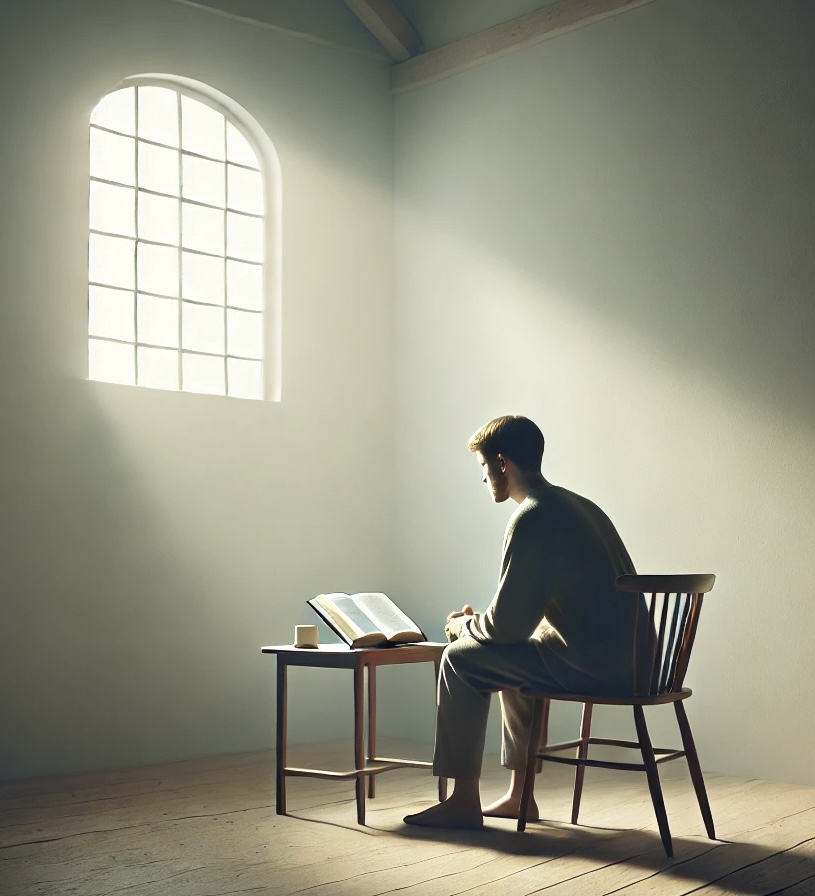
Be Quiet!

“All of humanity’s problems stem from man’s inability to sit quietly in a room alone.” this is one of my favorite quotes which. Blaise Pascal said centuries ago, and somehow, it feels even more true today. Think about it—how often do you reach for your phone the moment you’re bored? Why is it so uncomfortable to just sit still, alone with your thoughts? Pascal believed the answer wasn’t just about habit—it was about avoiding the truth.

He argued that when we sit quietly and step away from distractions, we’re forced to confront life’s deepest questions: What’s my purpose? Am I truly happy? Am I at peace with God? And let’s be honest—those questions can be intimidating. So instead, we distract ourselves. We dive into work, entertainment, and social media, anything to avoid the silence. But does it really work? Pascal didn’t think so, and the Bible agrees.

Paul says in Romans 1:18-20 that the truth about God is plain to us—His power and divine nature are clear in the world around us. But here’s the catch: people suppress that truth. Why? Because facing it means reckoning with who we are and how much we depend on God. That’s uncomfortable, so we run from it, filling our lives with noise and busyness instead.

Yet Scripture consistently shows that the solution isn’t more distractions; it’s stillness. In Psalm 46:10, God says, “Be still, and know that I am God.” Stillness allows us to see reality clearly—not just who God is, but who we are in relation to Him. And Jesus modeled this perfectly. Over and over in the Gospels, we see Him retreating to quiet places to pray, like in Matthew 14:23, where He went alone to a mountainside after a long day of ministry. If even Jesus needed time alone with the Father, how much more do we?

But solitude isn’t just about rest; it’s also transformative. In Lamentations 3:28-29, the writer encourages us to “sit alone in silence, for the Lord has laid it on him… there may yet be hope.” Sitting quietly forces us to face our pride, our sins, and our fears, but it also opens the door to humility, hope, and renewal.

Pascal’s insights also tie directly to Jesus’ teaching in Matthew 16:25: “Whoever wants to save their life will lose it, but whoever loses their life for me will find it.” Losing your life, in this sense, means letting go of the superficial self—the one that clings to comfort, distractions, and worldly success. When we lose that part of ourselves and embrace the truth, we find real life: peace with God and purpose in Him.

The problem is, distractions come with a cost. Pascal warned that diversions aren’t just innocent time-fillers—they’re a way to avoid dealing with life’s big questions. Jesus put it even more bluntly in John 3:19-20: “Light has come into the world, but people loved darkness instead of light… Everyone who does evil hates the light, and will not come into the light for fear that their deeds will be exposed.” It’s easier to stay busy than to let the truth expose what’s in our hearts. But the more we avoid it, the more restless and anxious we become.

So, what’s the way forward? How do we embrace the kind of solitude that Pascal and Scripture say is essential? Here are a few practical steps:
1. Start Small. Spend just 5-10 minutes a day sitting quietly. Use that time to pray or reflect on verses like Psalm 62:1: “Truly my soul finds rest in God; my salvation comes from him.”
2. Turn Off the Noise. Create boundaries with your phone and social media. Try sitting alone without reaching for a screen or filling the space with background noise.
3. Ask the Hard Questions. In your quiet moments, be honest with yourself: What truths am I avoiding? What distractions are keeping me from God?
4. Follow Jesus’ Example. Make time regularly to step away from the chaos of life. Jesus often retreated to solitary places to connect with God—and in those moments, He found strength and clarity.

Pascal’s challenge is simple but profound: Can we sit quietly, alone, and face the truth? Scripture assures us that when we do, we don’t face it alone. God meets us there, in the stillness, offering the peace and purpose we so desperately seek.

So, take a moment. Turn off the noise. Sit in the quiet. It may feel uncomfortable at first, but in losing the distractions, you’ll gain something far greater: the presence of God and the life He created you to live.